Food-grade silicone is one of the safest materials you can put in the microwave. It does not absorb microwave energy, does not leach chemicals under normal conditions, and handles temperatures well above anything a microwave cavity reaches. The one exception: non-food-grade silicone with fillers or extenders — that is a different story.
YES — food-grade silicone containers, bags, and lids are microwave-safe. They withstand temperatures up to 428°F (220°C) and do not absorb microwave energy. Check for the food-grade label or FDA compliance marking before use.
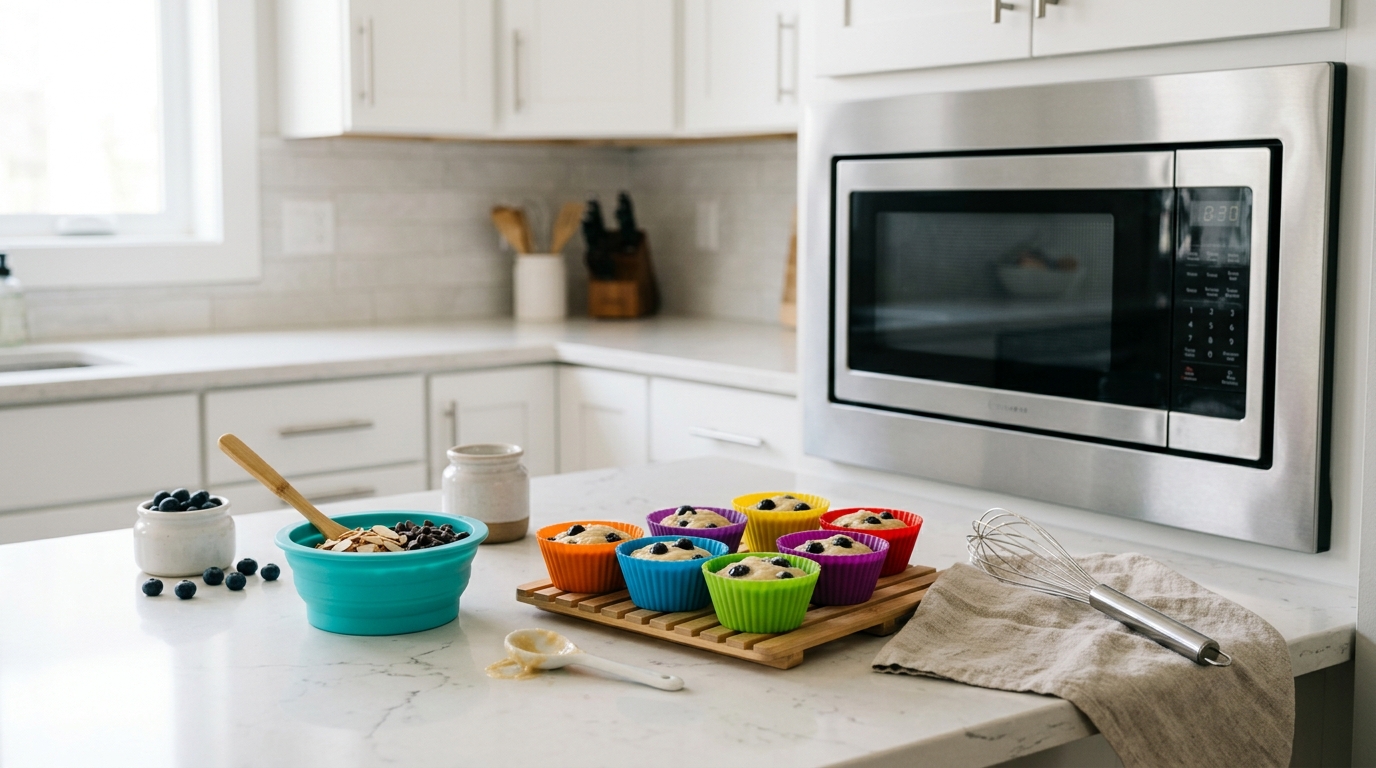
Is Silicone Microwave-Safe?
Yes, food-grade silicone is microwave-safe. Silicone is a synthetic polymer made from silicon, oxygen, carbon, and hydrogen. At 2.45 GHz (the frequency microwaves operate at), silicone is essentially transparent — the electromagnetic waves pass through it without being absorbed. This means the silicone container itself stays relatively cool while the food inside heats. It behaves similarly to glass in this regard, which is why silicone baking molds, silicone lids, and silicone storage bags have become common microwave accessories.
The material’s heat tolerance is also well suited for microwave use. Food-grade silicone is rated to 428°F (220°C) or higher by most manufacturers — well above any temperature achievable inside a standard household microwave.
The Core Risk: Non-Food-Grade Silicone
Not all silicone is equal. The distinction that matters is food-grade (also called food-safe or FDA-compliant) versus industrial or decorative silicone. Industrial silicone products — gaskets, sealants, caulks, molds not intended for food contact — may contain fillers, plasticisers, or silica extenders that are not safe to heat near food. Some cheaper food-contact silicone products from unverified manufacturers may also contain non-silicone fillers to reduce production costs.
A simple test for purity: pinch and twist the silicone. If a white haze or colour change appears at the stress point, the product likely contains filler (calcium carbonate or similar). Pure silicone does not whiten under stress. Products that pass this test are more likely to be high-quality food-grade material.
How to Confirm Your Silicone Is Safe
- Look for “food-grade,” “FDA compliant,” or “BPA-free” labeling — food-grade silicone contains no BPA, phthalates, or similar compounds.
- Check for a microwave-safe symbol (three wavy lines) on the product or packaging.
- Run the pinch-and-twist test: pure silicone holds its colour. Filler-containing silicone shows a white stress mark.
- Avoid very cheap silicone bags or containers with no country-of-origin or material certification markings.
Safe Alternatives (if you are not sure)
Borosilicate glass containers (Pyrex) and plain ceramic bowls are the most verified safe alternatives if you are uncertain about your silicone product. Both are genuinely microwave-transparent, stable at microwave temperatures, and carry no uncertainty around fillers or additives. For silicone lids specifically — as a cover rather than a food container — even a lower-confidence silicone product is lower risk, since the food does not sit directly in it.
Material Safety Comparison
| Product Type | Microwave-Safe? | Max Temp | Key Risk |
|---|---|---|---|
| Food-grade silicone (FDA compliant) | YES | 428°F (220°C) | None under normal use |
| Silicone lid (cover only) | YES | 428°F (220°C) | None — not in direct food contact |
| Silicone with filler (whitens under stress) | UNCERTAIN | Unknown | Filler composition unknown — avoid for food contact |
| Industrial silicone sealant / caulk | NO | Never near food | Contains non-food-safe additives and acetic acid curing agents |
Related Articles
- Can You Microwave Plastic?
- Can You Microwave Ziploc Containers?
- Can You Microwave Saran Wrap?
- Can You Microwave Glass?
- Can You Microwave Tupperware?