Mac and cheese microwaves well, but it dries out fast — boxed or homemade — because the pasta absorbs moisture quickly at high heat. A splash of milk and a loose cover solve both problems. Skip those two steps and you get dry, clumped pasta that tastes nothing like it just came off the stove.
YES — reheat mac and cheese at 70% power for 90 seconds to 2 minutes. Add 1 tablespoon of milk per serving before heating. Stir halfway through. Cover loosely to trap steam.
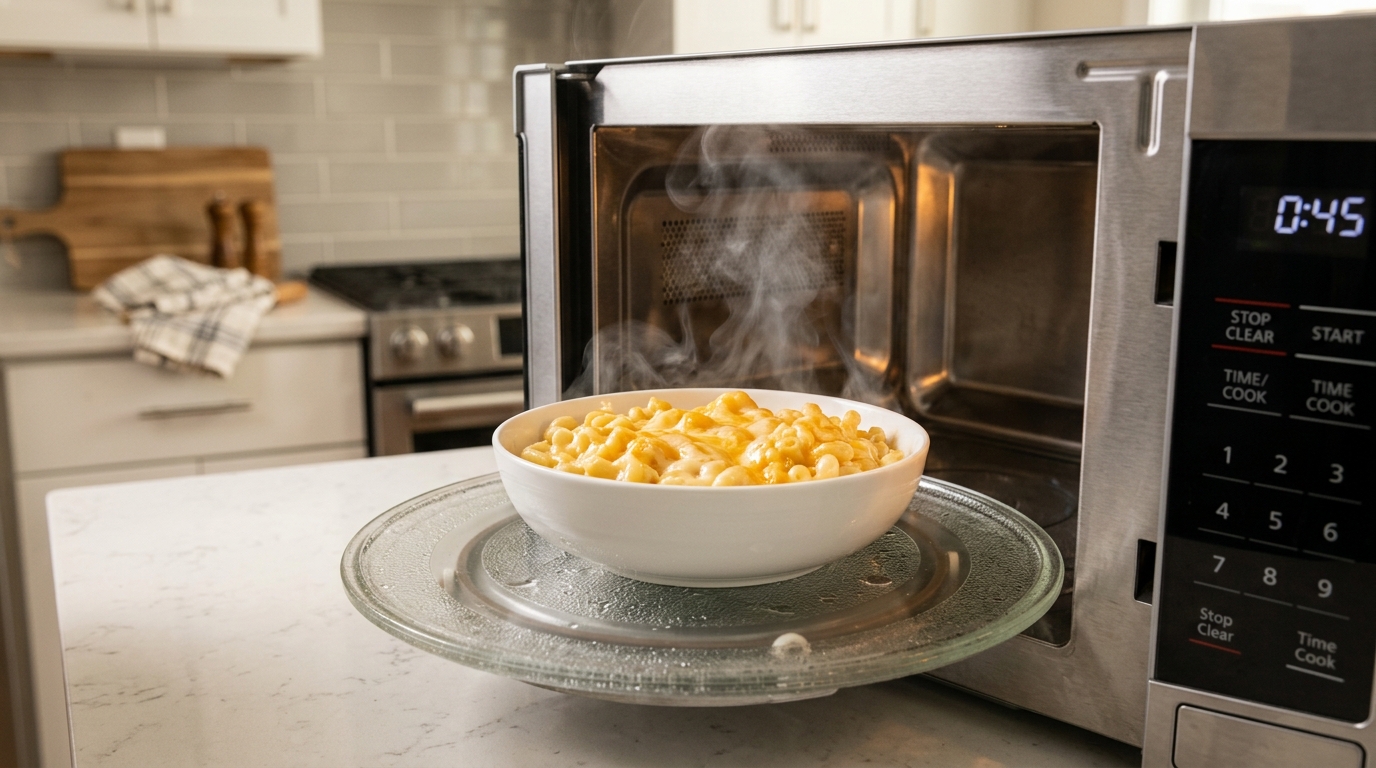
Can You Microwave Mac and Cheese?
Yes. Mac and cheese is one of the most microwave-friendly leftovers when handled correctly. The pasta is already cooked and the cheese sauce just needs to be rewarmed — it does not need to reach a food-safety minimum temperature the way raw meat does. The main challenge is moisture: pasta is porous and absorbs the cheese sauce as it sits, so reheated mac and cheese tends to be thicker and drier than fresh. The fix is adding milk back in before heating.
Best Method for Reheating Mac and Cheese
This method works for boxed mac (Kraft, Annie’s) and homemade baked mac equally well. The key is 70% power — it heats the cheese sauce without breaking it into greasy separated fat.
- Transfer mac and cheese to a microwave-safe bowl.
- Add 1 tablespoon of milk per cup of mac and cheese. Stir it in before heating.
- Cover loosely with a microwave-safe lid or damp paper towel — not sealed.
- Microwave at 70% power for 90 seconds.
- Remove, stir from the bottom. This redistributes heat and prevents the bottom from overcooking.
- If not hot through, return for another 30 to 60 seconds at 70%.
- Stir once more before serving.
For baked mac and cheese (with a breadcrumb topping), microwave at 70% until the centre is hot, then let it sit uncovered for 1 minute — the breadcrumb will crisp slightly from the residual heat.
Making Mac and Cheese from Scratch in the Microwave
You can cook dry pasta in the microwave from scratch. Use a large microwave-safe bowl with a lid. Add 1 cup of dry macaroni, 2.5 cups of water, and a pinch of salt. Microwave uncovered at 100% for 10 to 12 minutes, stirring every 3 minutes. Drain any remaining water, then stir in butter, milk, and cheese powder (boxed kit) or shredded cheese directly. The pasta absorbs the microwave energy efficiently — a 900W microwave cooks macaroni in about 11 minutes, a 700W takes 13.
How to Avoid the Dry Clumped Texture
The number one complaint about microwaved mac and cheese is dryness. Two causes: too much power (cheese sauce separates and the pasta absorbs all the fat) and no added moisture before heating. At 100% power, the cheese sauce gets too hot at the edges before the centre warms — the fat separates out and you get an oily layer on top with dry pasta underneath. Seventy percent power heats more gently and keeps the emulsion intact. The tablespoon of milk added before heating dilutes the sauce back to its original consistency.
Common Pitfalls and Safety Warnings
- No milk added: skipping the milk step results in thick, clumped pasta that tastes like the paste has congealed.
- 100% power: cheese sauce separates above about 180°F — the fat renders out and the sauce turns grainy and oily.
- Sealed container: steam cannot escape and builds pressure. Always use a loose cover or vented lid.
- Not stirring: without stirring, the bottom overcooks and the top stays cold — two very different temperatures in the same bowl.
Microwave Heating Comparison
| Scenario | Power | Time | Result |
|---|---|---|---|
| Reheat leftover (1 serving) | 70% + 1 tbsp milk | 90 sec + stir + 30 sec | Creamy, not dried out |
| Reheat leftover (2 servings) | 70% + 2 tbsp milk | 2 min + stir + 60 sec | Evenly hot, sauce intact |
| Cook dry pasta from scratch | 100%, uncovered | 10 to 12 min (900W) | Al dente pasta, ready for cheese |
| Reheat at 100% (no milk) | 100%, no moisture | 90 sec | Dry, clumped, sauce separated |
Related Articles
- Can You Microwave Spaghetti?
- Can You Microwave Spaghetti Noodles?
- Can You Microwave Ramen Noodles?
- Can You Cook Rice in the Microwave?
- Can You Microwave Nacho Cheese?